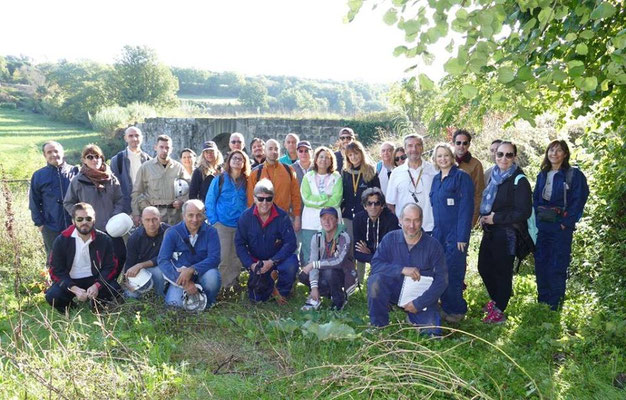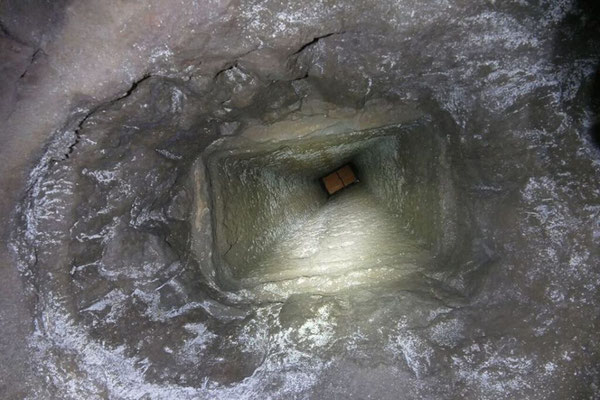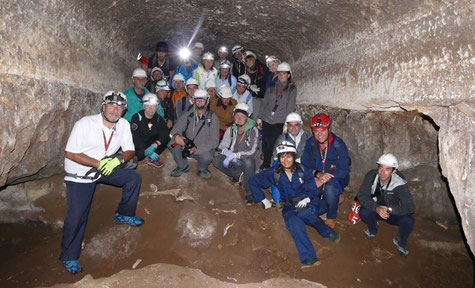
In these pictures You can see me and Roma Sotterranea adventuring into the second oldest Roman Aqueduct, the Anio Vetus, built in 272 BC, 63 kms long. 2,100 litres per minute of drinking water were brought to Rome directed mainly to public fountains, roman baths, public latrines and private villas of wealthy citizens.
In the ancient city eleven aqueducts were built so that water never lacked to people but they all needed a lot of maintenace work due to the large amount of calcium that blocked the passageways. Most of the aqueducts were underground and their maintenace required the building of wells so that professional workers could step down and clean them.
It is still possible today to drive into the countryside and with special permits enter into these narrow and claustrophobic tunnels to better appreciate the engineering skills behind them but also the difficult working conditions of those who spent hours in there to keep the water supply in good conditions for thousand of Romans.
The city has now a modern system with water mostly coming from eastern Lazio region and all the ancient aqueducts are not in function anymore but one: the Aqua Virgo, the one that brings water to the Trevi Fountain.